

CyberInflight has released its
Space Cybersecurity Market Intelligence Report, Edition 2026
CyberInflight provides market intelligence cybersecurity services, tailored for the space industry. Drawing on the CyberInflight team’s work throughout the year, it brings together research and observations, interview campaigns and insights gathered through consulting engagements.
Across 500 pages, the report examines the evolving threat landscape and the technology, commercial and regulatory developments shaping the future of space cybersecurity.
The report is supported by an extensive collection of entries through several databases:
- 752 attacks against space systems
- 614 space cybersecurity actors
- 210 space cybersecurity frameworks
- 725 contract entries
- Additional databases covering the space economy, CVEs, and industry conferences
Together, these resources provide a structured foundation for understanding a fast-changing ecosystem and tracking its key developments.
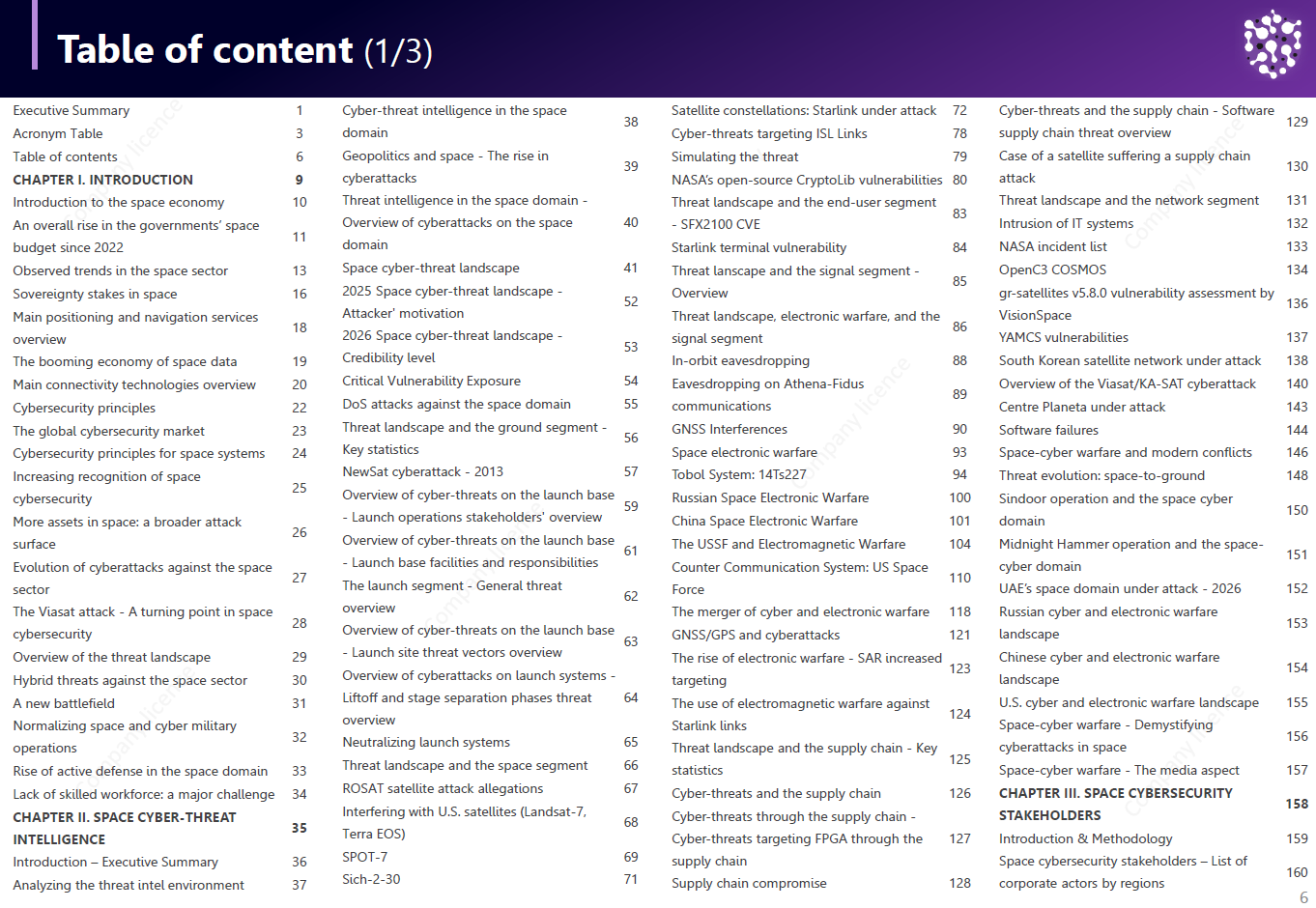
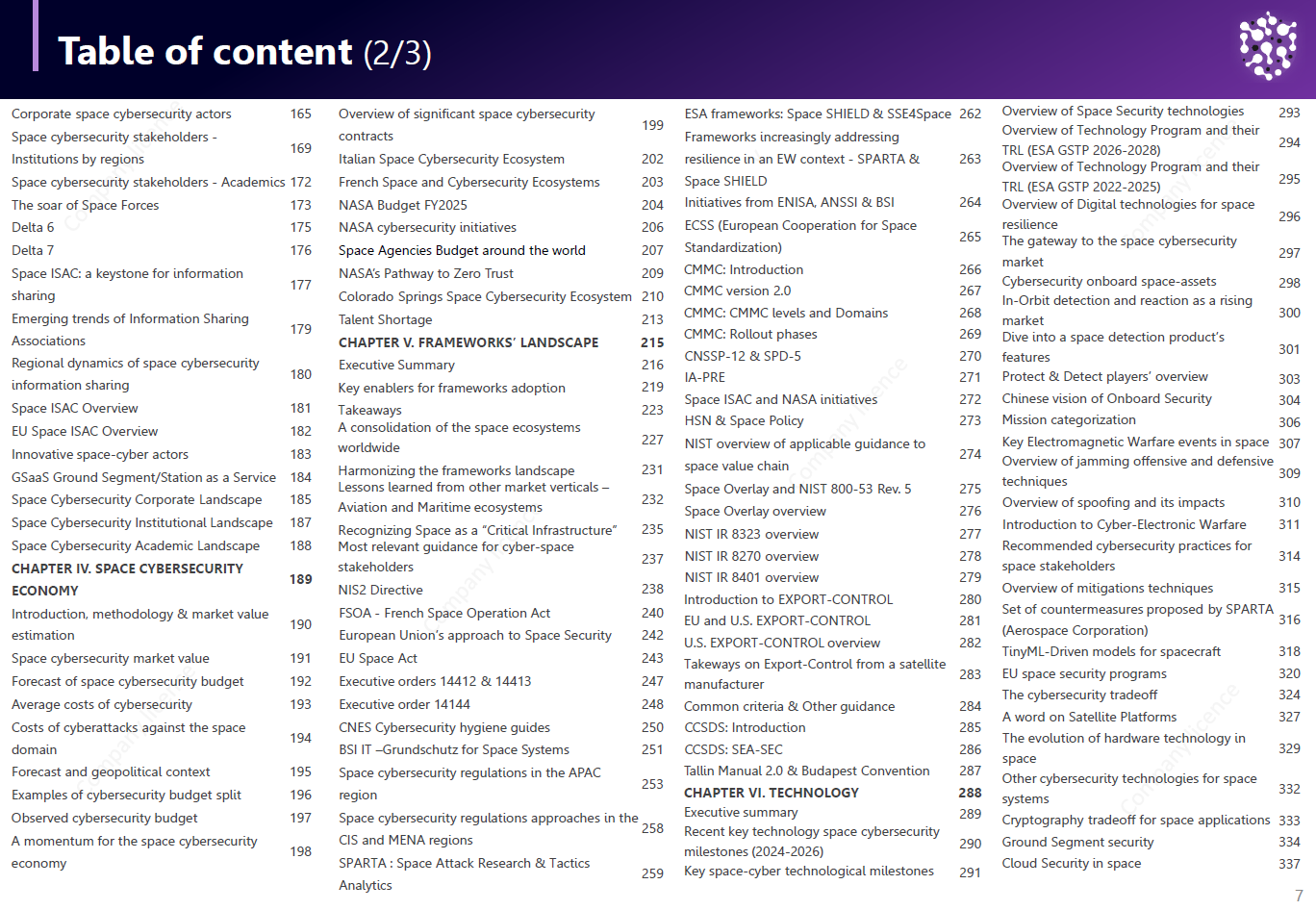
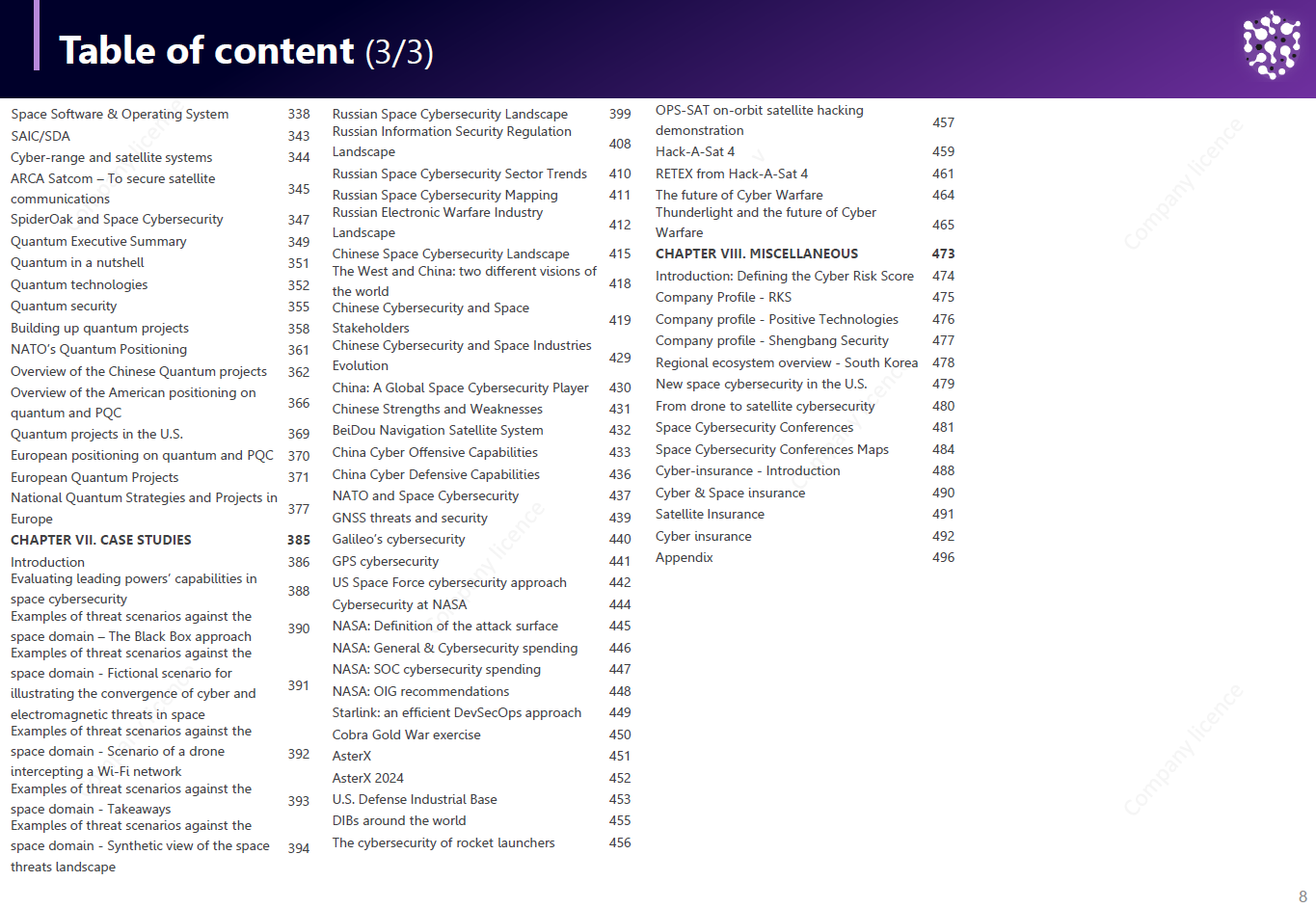
We have designed this report to be regularly updated to include the most important and relevant information to provide thorough market intelligence on Space Cybersecurity ecosystem for space industry.
What are the highlights of this 4th Edition?
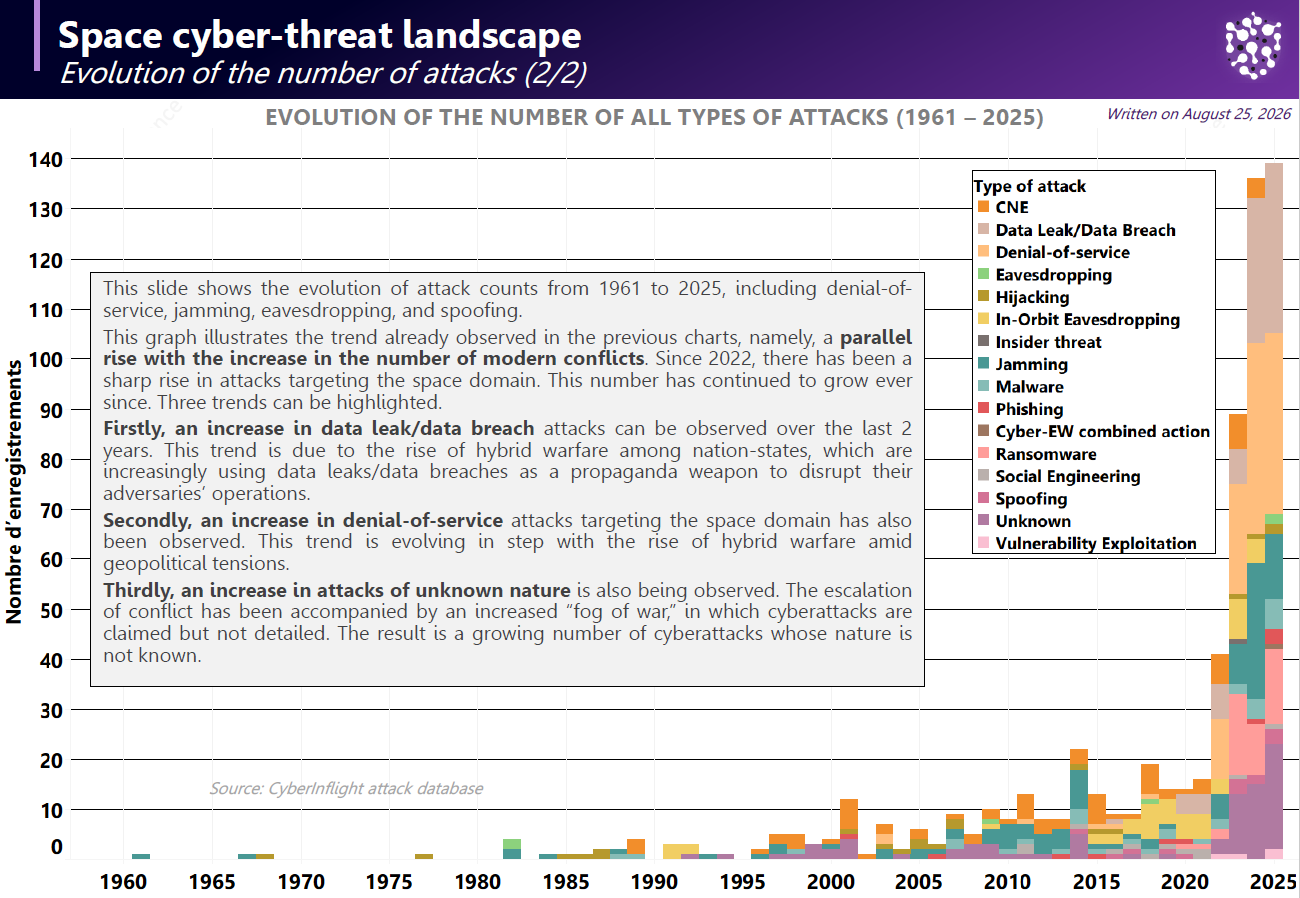
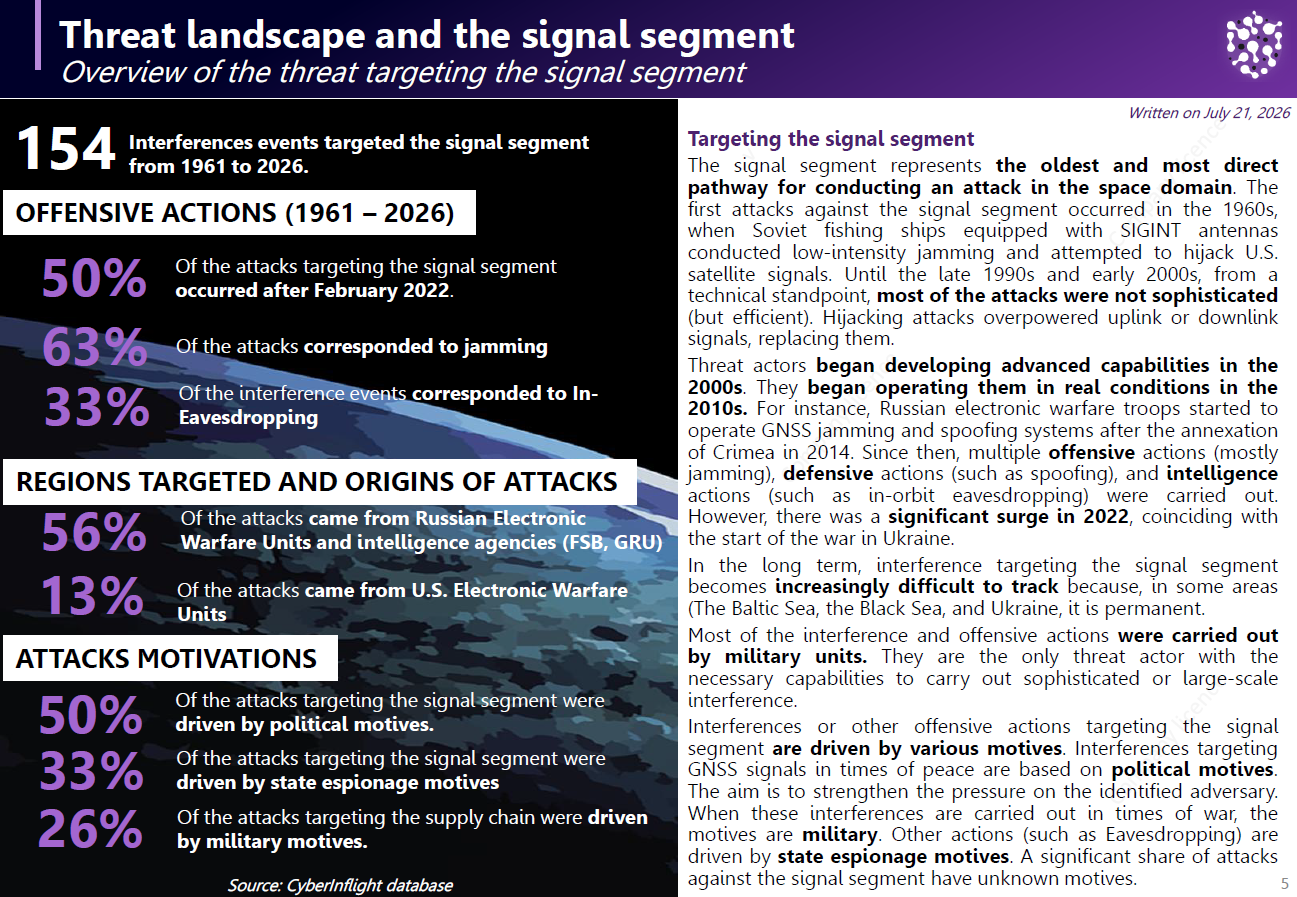
The space threat landscape remains highly volatile, with documented hostile incidents remaining at an elevated level comparable to last year, reaching approximately 140 attacks publicly tracked via open-source intelligence (OSINT). This sustained volume highlights how space assets and their associated communications links have become targets in modern conflicts. A defining feature of the current operating environment is the sharp proliferation of attacks across the electromagnetic spectrum and RF signal domain.
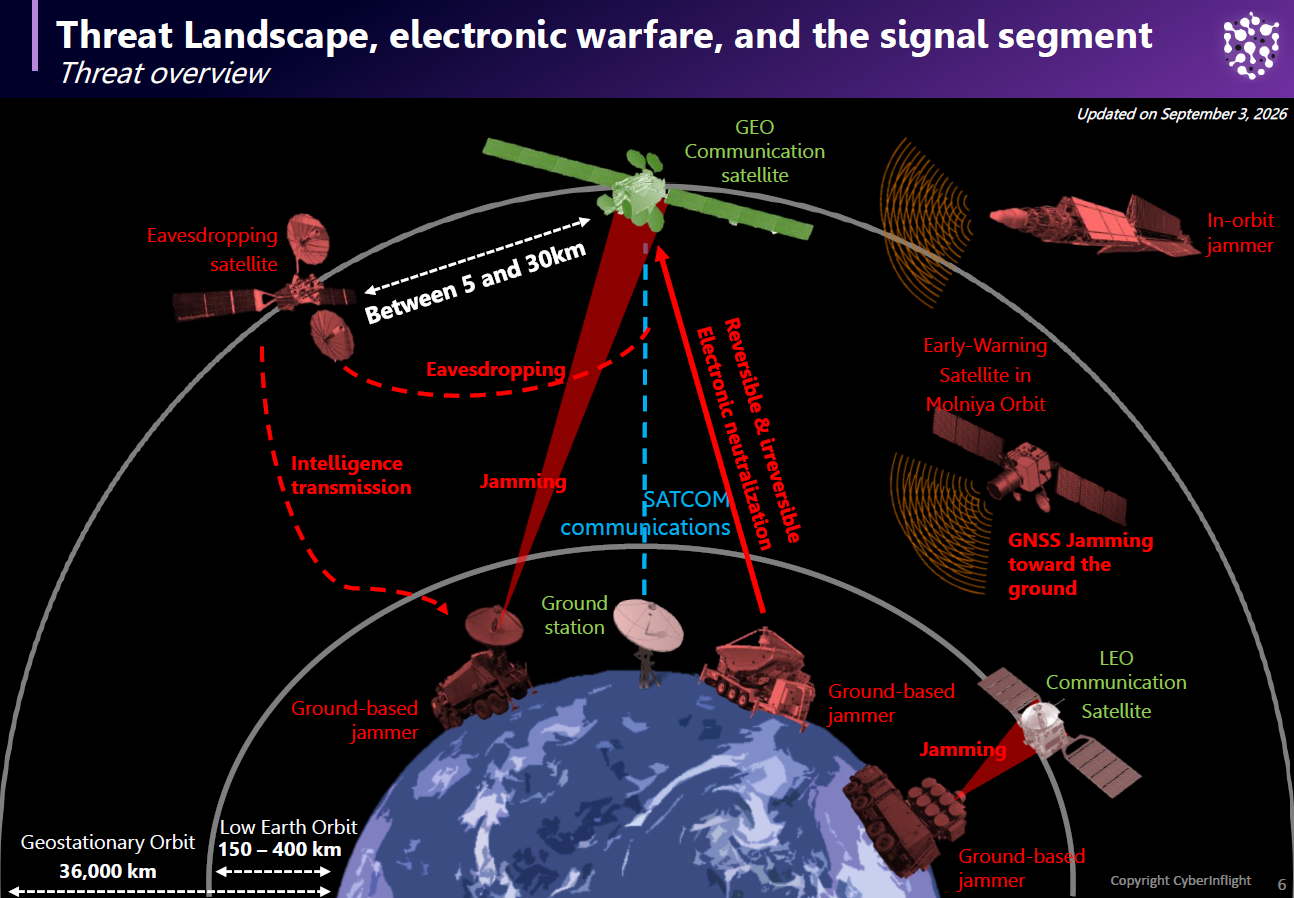
The boundary between space cyber operations and electronic warfare is eroding rapidly, leading to an increasing cyber-EW convergence.
Positioning, Navigation, and Timing (PNT) services face systemic interference, with GNSS spoofing and high-power jamming operations severely disrupting commercial aviation, maritime navigation, and precision systems across operational flashpoints. To execute these denial operations, militaries are deploying dedicated, specialized counterspace EW complexes.
As satellites become reconfigurable, networked computers in orbit, recent initiatives target modernized encryption, physical chip security, onboard software isolation, and quantum-safe defenses.
The regulatory landscape for space cybersecurity is shifting from voluntary recommendations to binding, harmonized baselines across the space, link, and ground segments. This regulatory momentum extends well beyond Western borders. In the APAC region, nations like Japan and Australia are embedding space assets directly into their critical infrastructure protection regimes, while India’s IN-SPACe introduces stricter authorization and cybersecurity mandates for a booming private space ecosystem.
The modern battlefield has transcended traditional physical borders, largely driven by the hybridization of war. Conflicts no longer rely solely on conventional forces; instead, they blend kinetic strikes with unconventional tactics like disinformation and cyber warfare.
Get your free teaser of our report: